Wicker Patio Furniture Types Explained
Wicker patio furniture splits into two choices: the weave material (resin, HDPE or natural plant fibers) and the furniture form (sofa set, sectional, bistro or rocker). Pick resin for a familiar woven look, HDPE for the toughest weather, and the form by how you sit and how many people join you.
On this page (12 sections)
- What does the word wicker actually mean?
- What are the main types of wicker by material?
- Which furniture forms does wicker come in?
- Conversation sets: the all-in-one social choice
- Sectionals: the flexible layout for larger spaces
- Bistro sets: small-space seating for two
- Rockers and gliders in woven frames
- Wicker or Adirondack: which form suits you?
- Which material holds up best in sun and rain?
- How should small patios use wicker furniture?
- How do you choose the right wicker type?
- The bottom line on wicker patio furniture types
The main types of wicker patio furniture come down to what the weave is made of and what shape it takes. Material decides how long the piece survives sun and rain; form decides whether it fits your deck and your daily habits.
Wicker is a weaving technique rather than a specific plant. Strands are woven over a frame to build the woven look.
That means the same style reaches your patio in resin, HDPE or natural fiber, and every one of them can come as a sofa, sectional or small bistro set.
This guide separates those two decisions. Start with the material, then match the form to how you sit and how many people share the space.
What does the word wicker actually mean?
Wicker means woven furniture, not a material. Any chair built by weaving strands over a frame is wicker, whether the strands are plastic, rattan palm or willow.
The word comes from the weaving method. Weavers bend flexible strands around a rigid frame, crossing them to build sides, seats and backs.
The gaps in the weave keep the furniture light and let air move through.
Because wicker describes technique, a label like "wicker chair" tells you little about weather resistance. Two chairs can look alike while one is natural rattan and the other is PE resin.
The material, not the weave name, decides outdoor life.
Woven furniture also differs from solid-frame styles. A wood Adirondack chair or an aluminum dining set is built from panels or cast pieces.
A wicker piece hides its frame under a skirt of woven strands.
That construction affects care. You clean the weave surface and look after the cushions, while the hidden frame does the load bearing.
Knowing which material the weave uses is the first real question.
Judge the material, not the label, when you shop. A familiar woven look can sit on a steel, aluminum or wood frame with very different behavior outdoors.
What are the main types of wicker by material?
The material types are resin (PE), HDPE and natural plant fiber, and each suits a different amount of sun and rain. Buyers looking at types of wicker patio furniture usually sort by this question first.
Here is how they differ.
| Material | Look | Weather resistance | Best setting |
|---|---|---|---|
| Resin (PE rattan) | Woven rattan imitation | Good in most weather | Patio, porch, poolside |
| HDPE | Matte, uniform strands | Very good, resists fading | Open deck, sun and rain |
| Natural rattan | Warm, irregular tones | Limited | Covered porch |
| Willow or reed | Rustic, tight weave | Limited | Indoor or sheltered space |
Resin and PE rattan
Resin wicker, often sold as PE rattan, uses plastic strands woven over a metal frame. It copies the look of natural rattan while handling rain and sun far better.
PE stands for polyethylene. The plastic resists moisture, so the weave does not swell or rot the way plant fiber can.
A well-made resin chair can sit outside through most of the year.
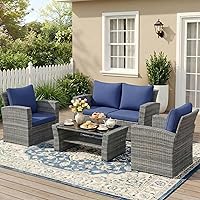
Color choice is wide, from brown and beige to grey. The Homall set below uses PE rattan over steel and pairs it with a tempered glass table for drinks and books.
Many resin sets go a step further and combine the weave with cushions.
HDPE wicker
HDPE, or high-density polyethylene, is a stronger plastic strand often used for all-weather furniture. It holds color well and stands up to sun, rain and repeated washing.
HDPE strands tend to look more uniform than resin rattan. Some sets go for a clean, matte finish rather than a natural palm look.
That suits modern decks and open lawns.
If sun and rain hit your furniture directly, HDPE is worth comparing with standard resin. Our explainer on HDPE patio furniture covers how the material is made and where it falls short.
Natural rattan and plant fibers
Natural rattan comes from a climbing palm and has a warm, irregular look that plastic struggles to copy. Willow and reed are woven the same way but behave differently outdoors.
Plant fibers dry out and fade in direct sun. Rain can swell the strands and encourage mold in the weave.
These pieces suit a covered porch, a sunroom or an indoor corner.
Vintage wicker often falls in this group. It can look lovely, but it needs shelter and occasional re-oiling to stay sound.
Pick a synthetic weave for open sky; pick natural fiber only under a roof. If you are still weighing the two, our wicker vs rattan comparison untangles the labels.
Which furniture forms does wicker come in?
Wicker comes in conversation sets, sectionals, bistro sets, rockers and lounge pieces, and the form matters as much as the weave. The right shape follows how you use the patio, not just how it looks.
A family that hosts often wants a full set with a low table. A reader with a small balcony may do better with a two-chair bistro.
Solo sitters might only need one deep lounge chair.
The rest of this guide walks through those forms. Each one names the product we would pick for that need and ends with a clear rule.
Conversation sets: the all-in-one social choice
Conversation sets are the best pick for most people, because they bundle seating and a table in one order. You get a place to sit, set down a drink and spend an evening without hunting for matching pieces.
A typical set includes two or more chairs and a small table. The Homall set is a clear example: two single chairs, one double chair and a tempered glass table.
That seating suits a couple with occasional guests.
Materials matter here. Homall uses a solid steel frame under premium PE rattan, and the maker rates the set for 330 lb.
The chair backs are shaped for a supported sitting angle, and the table is a good size for drinks, food or a stack of books.
Cushions are part of the package, and so is their care. Homall advises bringing the cushions inside on rainy or snowy days to extend their life.
That is normal for any cushioned wicker set.
Assembly takes time. Homall includes the hardware and instructions, and the set is light enough at 52.9 lb to move around a deck once built.
Pick a conversation set if you want everything matched in one purchase. It is the simplest route to a ready patio.
Sectionals: the flexible layout for larger spaces
Sectionals win when your space is big and your seating needs change. Separate pieces let you build a long sofa, an L-shape or a loose arrangement around a fire pit.
The Qsun 7-piece PE rattan sectional shows why. It includes 2 corner chairs, 4 armless chairs and a glass coffee table.
You choose how to combine them, and the fasteners stop the joined sections from sliding apart.
That flexibility helps on an apartment balcony or a wide deck. You can spread the pieces for a party and pull them tight for everyday family use.
Qsun says the PE rattan and cushions resist denting, cracking and fading.
Qsun notes the cushion covers are water resistant and better for outdoor weather. The set arrives in 2 packages, so plan for two deliveries and a longer build.
Its size is real. The full layout measures 108 x 54 x 25 in, and the set weighs 179 lb.
A sectional this wide wants a generous patio.
Choose a sectional when layout freedom matters and the space can take it. For more options, see our wicker patio furniture set roundup.
Bistro sets: small-space seating for two
Bistro sets fit small balconies, patios and breakfast corners, where a full sofa set would crowd the floor. They pair one or two seats with a small table for coffee, a book or a light meal.
The Qsun 3-piece rocking bistro set is our pick here. It pairs two rockers with a coffee table in a compact footprint.
Each seat supports up to 250 lb.
The rocking motion is the reason to choose it. A rocker invites a slower sit than a straight bistro chair, which suits quiet mornings and long evenings on a porch.
The powder-coated steel frame is rust-proof, and the hand-woven rattan is compact and weather resistant.
Cushions use high-density sponge for comfort. Covers are splash proof, and you can unzip them for machine washing, which helps on a set this close to morning coffee.
Assembly is simple, and the set weighs 39 lb, so one person can shift it. It suits an apartment deck, a small backyard or a poolside corner.
Pick a bistro set if you mainly sit in pairs and floor space is tight. Rockers are a bonus for slower, longer sits.
Rockers and gliders in woven frames
Rockers and gliders bring motion to the patio, and the woven look softens the frame. A wicker rocker can feel warmer than a metal glider, and it fits a porch where looks matter.
Motion is the point. A gentle rock suits reading, watching a garden or settling a child.
The same seats look heavier than a straight chair, so check clearance behind the rocker arc.
The Qsun rocking bistro set above is a small version of this idea. It pairs woven seats with a rocking base, so the comfort of the motion comes with the style of wicker.
Larger rocking chairs work best with a side table. Many sit lower than dining chairs, so choose a table that matches the seat height.
If the goal is shared seating, skip single rockers. A conversation set or sectional covers a group better, and a glider bench can be added later for extra movement.
Choose a rocker when one person will use it often and loves the back-and-forth. Match the space behind the chair before buying.
Wicker or Adirondack: which form suits you?
Wicker and Adirondack are different sitting styles, not rivals. Wicker is woven and often upright, while an Adirondack chair reclines in a solid frame with wide arms.
An Adirondack chair tilts you back with a deep seat and broad flat arms. It suits sunbathing, reading and long low lounging.
Wood versions age outdoors with a grey patina, and the shape has become a classic for lawns and decks.
Wicker suits covered porches and matching set layouts better. It offers cleaner lines, easier cleaning and cushions, and it adapts to conversation groups.
Some buyers want both: Adirondacks around a fire pit, and a wicker sectional under a porch roof. The materials differ, but the goal is the same relaxed outdoor hour.
Pick Adirondack for lounging in the open; pick wicker for a matched set under cover. Neither is better in every yard.
Which material holds up best in sun and rain?
Synthetic wicker holds up best, with HDPE leading on long exposure and PE resin close behind for most homes. Natural plant fiber needs shelter to stay sound.
Sun bleaches plant fibers over time and dries the strands until they crack. Rain swells them and leaves moisture inside the weave, which invites mold.
A covered porch slows that process but rarely stops it.
PE rattan resists water and rot, so it handles rain and humidity well. It can still fade under years of strong sun, though the darker brown and grey finishes in many sets hide that better than pale tones.
HDPE does best where sun and rain arrive daily. The strands resist fading and stay firm, and the woven surface wipes clean.
Our HDPE guide above covers the specifics.
Frames matter just as much as weave. Steel needs rust protection; powder-coated steel like the Qsun bistro set's frame resists rust in wet weather.
Aluminum frames never rust but can be lighter.
Cushions and covers
Cushions age faster than the weave in most sets. Keep them dry where you can.
The Homall advice to bring cushions indoors on wet days is sound for any cushioned wicker.
Pick HDPE or PE resin where rain and sun hit directly; keep natural wicker under cover. Re-check frames and cushions each season.
How should small patios use wicker furniture?
Small patios work best with two-seat bistro sets or one compact conversation set, laid out along the walls. Bigger wicker pieces crowd the floor and make the space feel tight.
Measure the open floor. A bistro set like the Qsun rockers takes far less width than a full sofa set, and it leaves room to open a door or walk through.
For a single chair, a wicker lounge chair with a side table works well. For two people, a bistro set is enough.
For a family, a small conversation set may fit if the table is modest.
Vertical space matters too. A taller rocker or sectional needs clearance behind it.
Corner layouts make the most of narrow patios, which is where the flexibility of a sectional pays off.
Keep paths clear. A set that blocks the door or the grill gets moved, and moving cushions and frames each day grows tiring.
Match the piece size to the floor, not the wish for more seats. Measure first, then order.
How do you choose the right wicker type?
Choose the right wicker type by answering three questions in order: where will it sit, how many people will gather, and how much upkeep will you accept. Those answers point to one material and one form.
First, the location. Open lawn and an uncovered deck want HDPE or PE resin.
A covered porch allows natural rattan or willow. A sunroom suits almost anything.
Second, the group size. Two people favor a bistro set.
A family or regular guests favor a conversation set or sectional. One lone sitter can choose a rocker.
Third, upkeep. Cushioned sets need dry storage for cushions.
Natural wicker needs occasional oiling and shelter. Synthetic rain-friendly sets wipe clean with a damp cloth.
Consider assembly too. Small bistro sets take less time than a 7-piece sectional delivered in several packages.
Plan the build before the delivery date.
Pick material for weather, form for company, then confirm the fit. That order gets you the right set in one pass.
The bottom line on wicker patio furniture types
The main types of wicker patio furniture are resin, HDPE, natural fiber, and the forms each one takes: conversation set, sectional, bistro and rocker. Pick resin for a familiar woven look, HDPE for the toughest sun and rain, and natural fiber only under cover.
The form follows your habits. A conversation set with a table is the easiest route for a family.
A sectional rewards a big deck with layout changes. A rocking bistro set suits small spaces and slow mornings.
A single rocker suits a porch corner.
If you want our overall pick, the Homall 4-piece set covers the most needs in one box, with PE rattan over steel, two single chairs, a double chair and a glass table.
For more ways to fill a porch or deck, browse our wicker patio furniture sets and compare woven frames with our HDPE explainer.
Frequently asked questions
What are the main types of wicker patio furniture?
The main types split by material (resin, HDPE and natural plant wicker) and by form (conversation sets, sectionals, bistro sets and rockers). Most shoppers decide the material first, then the shape that fits their space.
Is wicker the same as rattan?
No. Wicker describes the weaving method, while rattan is a climbing palm whose stems can be woven.
Synthetic PE rattan imitates the look with plastic strands, so a piece can be wicker in style without any natural rattan.
Is natural wicker good for outdoor use?
Natural plant wicker suits covered porches better than open lawns. It can dry out, fade or grow mold when rain and sun reach it directly, so synthetic resin generally lasts longer in exposed spots.
How do I keep wicker patio furniture clean?
Wipe the weave with a damp cloth and dry it fully. Bring cushions indoors before rain, since trapped moisture in the padding is the hardest part to dry out.
Do wicker patio sets need a lot of assembly?
Assembly varies by set. Small bistro sets often need only a few steps, while larger sectionals arrive in several packages and take longer to bolt together.
Check the package count before you order.