What Is HDPE Patio Furniture? Pros and Cons
HDPE patio furniture is outdoor furniture made from high-density polyethylene, a durable plastic. It can resist moisture and needs little routine care, but its weight, finish, and size still matter when you choose a piece.
On this page (8 sections)
- What is HDPE patio furniture made of?
- What are the main benefits of HDPE furniture?
- What are the drawbacks of HDPE patio furniture?
- How does HDPE compare with wood and other plastics?
- Which HDPE furniture details should you check before buying?
- How should you care for and set up HDPE furniture?
- How can you avoid common HDPE buying mistakes?
- Is HDPE patio furniture worth choosing?
HDPE patio furniture is outdoor furniture made from high-density polyethylene, a durable plastic. It can resist moisture and needs little routine care, but its weight, finish, and size still matter when you choose a piece.
HDPE is shaped into chairs, rockers, benches, and tables. Some pieces have a wood-like grain, while others have a smoother finish.
The material gives you a useful starting point, not a full picture of comfort or fit. Compare the shape, dimensions, weight, assembly needs, and care directions before you buy.
What is HDPE patio furniture made of?
HDPE patio furniture is made from high-density polyethylene, a type of plastic. Manufacturers can form it into boards or shaped parts for outdoor seating and tables.
A textured finish can look like wood grain, but the resemblance is visual: HDPE is plastic, so it won't have the natural grain and variation of a wood board. Some furniture uses virgin HDPE, while material and construction can vary by brand.
POLYWOOD says its proprietary lumber includes landfill-bound and ocean-bound plastics. If material sourcing matters to you, compare the brand's description of its particular furniture.
What are the main benefits of HDPE furniture?
HDPE can suit outdoor spaces where you want moisture resistance and simple routine care. A wood-like surface also gives you another option if you want a wood tone without buying a piece made from natural wood.
Plastic doesn't rust, and HDPE is less prone to moisture-related problems such as swelling than untreated wood. That doesn't make every chair immune to weather damage or remove the need to follow its care directions.
Cleaning can be straightforward. Some pieces can be wiped with a damp cloth or rinsed with water, while others allow soap and a soft brush.
For a step-by-step routine, see our guide to cleaning plastic and HDPE Adirondack chairs. If you're still choosing the kind of seat that fits your space, our guide to front porch furniture covers common seating options.
What are the drawbacks of HDPE patio furniture?
HDPE furniture can be heavy, less natural-looking than real wood, and more costly than basic plastic options. Those tradeoffs matter if you move furniture often, prefer natural materials, or have a tight budget.
A heavier chair may be harder to carry, rearrange, or store. It can also be less likely to shift in a breeze, though weight alone doesn't make a chair windproof; placement and shape matter too.
Compare the furniture's weight with how you use the space, and see our tips for choosing wind-resistant patio furniture.
The plastic surface may not suit everyone, even when it has a textured grain. Color and finish can also vary, so consider how the piece will look beside your deck, siding, and other outdoor furniture.
How does HDPE compare with wood and other plastics?
HDPE sits between basic molded plastic and natural wood for many buyers: it offers simple care with a more substantial, wood-like look. The right material depends on whether you value low upkeep, natural grain, easy moving, or a particular style.
| Material | What to expect | Consider it if |
|---|---|---|
| HDPE | Plastic construction, sometimes with a wood-like texture; routine cleaning is often simple | You want outdoor furniture with low routine care |
| Wood | Natural material with a distinct grain; care needs depend on species and finish | You prefer real wood and are ready to maintain it |
| Basic molded plastic | Often lightweight; appearance and construction vary | Easy moving or a lower-cost option matters most |
| Metal | A different look and frame material; surface temperature and finish care vary | You prefer metal construction or its style |
These are broad differences, not guarantees about every chair. Compare the construction, finish, dimensions, weight, and care directions for the specific piece.
For a brand-focused Adirondack comparison, read POLYWOOD vs HDPE Adirondack chairs. HDPE names a material; brands can still differ in shape, finish, hardware, and construction.
Which HDPE furniture details should you check before buying?
Check dimensions, weight, assembly, and care before choosing HDPE patio furniture. These details help you tell whether a piece will fit your space and suit the way you use it.
Measure the floor area where the furniture will sit, then leave room for walking, sitting down, and using nearby doors. A rocker or glider also needs clearance for its movement, so don't measure only the width of the frame.
For a chair, compare the seat style and overall dimensions with the people who will use it. Our Adirondack chair dimensions guide explains which measurements to compare.
Think about how often you'll move the piece. A heavier chair or bench can work well in a fixed spot, while a lighter option may be easier to rearrange or store.
Check assembly instructions before ordering, especially if you need to carry parts through a narrow doorway. Plan a clear work area, sort the hardware, and follow the instructions in order.
For multi-part furniture, leave screws slightly loose until the pieces are aligned if the instructions recommend it.
Finally, match the shape to the job. A single Adirondack chair suits one person's lounging spot, a pair of rockers gives you two moving seats, and a glider bench seats two people together.
Is HDPE patio furniture right for your space?
Choose HDPE if you want outdoor seating with low routine care and don't mind a heavier plastic piece. Skip it if you need furniture that's especially easy to carry, or if the look and feel of natural wood are a priority.
For a fixed lounging spot, the Signature Design by Ashley chair is an Adirondack style made from virgin HDPE with a textured grain finish.
It measures 31 in wide, 34 in deep, and 38 in high. Measure the spot and the route to it before assembly; instructions, hardware, and tools are included.
Should you choose HDPE patio rocking chairs?
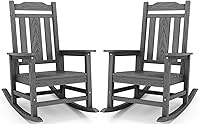
Choose a rocker if you want gentle motion and have enough room for its rocking arc. The SERWALL set is for someone who wants two gray outdoor seats in one style.
Each chair is about 35 in deep and 27 in wide, so check the depth and clearance before placing it near a wall, railing, or table. Partial installation is required; set aside time to assemble both chairs before use.
Skip this set if you need seats that stay still or your porch can't fit the rocking motion. For more options, browse our outdoor rocking chairs for a porch.
Is POLYWOOD HDPE patio furniture a fit for you?
Consider the POLYWOOD Adirondack chair if you want that familiar reclined shape in the brand's proprietary lumber. POLYWOOD says its material includes landfill-bound and ocean-bound plastics.
The chair assembles with marine-grade hardware. POLYWOOD describes it as weatherproof and recommends cleaning with soap, water, and a soft-bristle brush.
This option suits a fixed outdoor seat if you like its slate gray color and classic shape. Choose another material if you want natural wood, or another style if an Adirondack's reclined seat doesn't match how you like to sit.
When does a two-person HDPE glider bench make sense?
A two-person glider bench suits a porch or patio where you want shared seating with a back-and-forth motion. The SERWALL bench is made of HDPE, with metal reinforcement on its backrest and legs.
It measures about 49 in wide and is designed for 2 people. Allow room for the seat to move, and check the floor space before placing it near a wall, railing, or table.
This bench is a poor fit if you need separate seats, have limited floor space, or want furniture you can move around often. Its 72 lb weight makes planning the location before assembly especially useful.
How should you care for and set up HDPE furniture?
Use the care directions for the exact furniture, and place moving seats where they have clear space. For routine dirt, a damp cloth or water rinse may be enough, depending on the brand's instructions.
Use soap and a soft-bristle brush only when the brand permits them. Avoid abrasive pads and strong cleaners unless the care directions say they're safe for the finish, then rinse off any soap you used.
During setup, check that the ground is level and the furniture is stable before using it. For a rocker or glider, leave clearance for the seat to move without hitting walls, railings, planters, or tables.
Don't assume a heavy piece will stay safe in every location or a weather-resistant finish needs no attention. Check joints and hardware during normal upkeep, and follow any storage guidance from the brand.
How can you avoid common HDPE buying mistakes?
The most common mistakes are buying by material name alone, skipping measurements, and overlooking how the seat moves. A short check before ordering can prevent a piece from feeling wrong in daily use.
- Measure the whole space. Include walking room and clearance for a rocker or glider, not just the furniture's footprint.
- Check the seat style. An Adirondack chair, rocker, and glider bench suit different ways of sitting. Choose the motion and shape you actually want.
- Plan for the weight. Decide where a heavy piece will go before you assemble it, especially if you expect to move it later.
- Read the assembly and care directions. Confirm what tools are included and which cleaning methods are allowed for that finish.
- Compare the exact finish and construction. A wood-like texture doesn't make the furniture wood, and HDPE alone doesn't tell you how a particular chair is shaped.
Is HDPE patio furniture worth choosing?
HDPE patio furniture is a good fit if you want low routine care, moisture resistance, and an alternative to natural wood. Its weight, plastic feel, and higher cost than basic plastic can be drawbacks if you want to move furniture often or prefer real wood.
Pick the Ashley or POLYWOOD Adirondack chair for a fixed lounging spot, the SERWALL rockers for two separate moving seats, or the SERWALL glider for shared seating. Measure first, check the care directions, and use our buying guides to plan the rest of your outdoor seating.
Frequently asked questions
What does HDPE mean in patio furniture?
HDPE means high-density polyethylene, a type of plastic used to make outdoor furniture. It can be shaped into boards or formed parts, with finishes that range from smooth to wood-like.
Check the material and care directions for the specific piece you are considering.
Those details help you compare its construction, appearance, and upkeep.
Is HDPE patio furniture better than wood?
HDPE can suit you if you want low routine care and a material that resists moisture. Wood gives you a natural material and may need periodic care depending on its species and finish.
Compare the look, weight, care needs, and budget for your space before deciding.
Neither material is the best fit for every patio.
Does HDPE patio furniture fade in the sun?
Some brands describe their HDPE furniture as weather resistant, but that does not guarantee a specific lifespan or that a finish will never change. Sun exposure, color, and construction can all affect how a piece looks over time.
Use shade when it suits your space and follow the furniture's care directions.
How do you clean HDPE patio furniture?
Start with the care directions for your furniture. A damp cloth or water rinse may handle routine dirt, while some brands also allow soap and a soft-bristle brush.
Avoid harsh cleaners and abrasive tools unless the brand says they are safe for that finish.
Rinse away soap after cleaning and let the surface dry.