Aluminum vs Cast Aluminum Patio Furniture: Which Is Better? (November 2026)
Choose cast aluminum for heavy, decorative pieces like benches, and extruded aluminum for large seating sets that need to be light and strong. In this aluminum vs cast aluminum patio furniture comparison, the lighter frame usually wins on patios.
On this page (7 sections)
- Aluminum vs cast aluminum: which material wins overall?
- How much does each material weigh on the patio?
- Which material holds up better to weather?
- Which type handles wind and heavy use better?
- Does cast aluminum cost more to buy and keep?
- Who should buy which material?
- The verdict: pick the frame for how you'll use the patio
Choose cast aluminum for a heavy, decorative bench that stays put, and extruded aluminum for a full patio set you want to move easily. In this aluminum vs cast aluminum patio furniture comparison, the heavier frame wins on looks and stability, while the lighter frame wins on flexibility and everyday use.
The two materials look alike at a glance. They behave very differently once a bench sits in the garden through a wet season or a sofa set gets rearranged for a party.
We compared the specs and construction of both types, plus four sets that show what each material does well. Our score weighs specs, features and buyer feedback against what you're shopping for.
Aluminum vs cast aluminum: which material wins overall?
Extruded aluminum wins for most patios, because large seating sets stay light and still resist rust. Cast aluminum is the better pick when you want a single heavy statement piece, like a garden bench or a bistro table.
The two names describe how the metal is formed. Cast aluminum is poured into a mold as a liquid and cools into a solid shape.
Extruded aluminum is pushed through a die as a long hollow tube or channel, then cut and welded into frames.
That difference in production explains the practical gap. A cast piece can carry deep floral patterns and rounded arms in one solid form.
An extruded frame uses thinner walls and hollow sections to keep a large set portable.
For a set with six or seven seats, the hollow frame matters. You can shift a chair alone to mop a deck or dodge a sprinkler.
A cast aluminum frame of the same size would be far too heavy for one person to move on a whim.
So the answer depends on what you're buying. A single bench or side table rewards the denser metal.
A conversation set, dining set or sectional rewards the lighter tube frame.
One more clue hides in the construction details. The VINGLI bench pairs cast iron supports with aluminum panels, and the YKSY&YKSY is all cast aluminum.
Both sit in the same outdoor bench category, yet they take opposite routes to the same goal: a seat that survives the weather without rusting away.
That overlap is common in patio furniture. The frame material and the rated weight tell you more than the label, so read both before you decide.
Aluminum vs cast aluminum at a glance
| Feature | Extruded aluminum | Cast aluminum |
|---|---|---|
| How it's made | Pushed through a die as hollow tube | Poured into a mold as solid metal |
| Weight | Light, easy for one person to move | Heavy, needs two people to shift |
| Detail and decoration | Simple lines and clean welds | Deep patterns, curved arms, ornate backs |
| Strength | Strong tube frame, can dent on a sharp hit | Rigid and hard to bend |
| Rust resistance | High when powder coated | High on the aluminum, watch the joints and hardware |
| Best use | Large seating and dining sets | Benches, side tables and accent pieces |
| Wind stability | Needs tie-downs in open spots | Stays put on its own weight |
How much does each material weigh on the patio?
Cast aluminum is noticeably heavier than extruded aluminum for the same footprint, so weight is the first thing to check if you plan to move the furniture. The VINGLI bench shows the mix: its frame is cast iron with aluminum panels and it weighs about 20.7 lb.
A pure cast aluminum bench like the YKSY&YKSY is also heavier than a hollow tube frame of similar size. That weight keeps it anchored when a gust crosses an open lawn.
It also means dragging it across a deck is a two-person job.
The bench specs make the trade-off concrete. The VINGLI benches measure 38.5 in wide, 13.5 in deep and 31 in tall, with a seat height of 16.25 in.
That shallow depth fits a narrow path beside a flower bed, and the 20.7 lb weight means one person can still lift it to mow underneath.
The YKSY&YKSY bench lists 39 in wide by 21.25 in deep by 31 in tall and 18.1 lb. It is lighter on paper, but its solid cast frame and deeper seat give it a planted feel on a lawn.
Extruded aluminum sets keep weight down so you can slide a chair back after dinner. The trade-off is that a light set can slide or tip in strong wind unless you tie it down or store it before a storm.
Think about your routine. If you rearrange seating often or store cushions and frames in a garage over winter, lighter aluminum is easier on your back.
If the bench stays in one spot by the path, the heavier cast piece is fine.
Weight across a whole set
A bench is easy to judge by the pound. A full set is not.
The Oasbira five-piece set ships at about 51 lb, and that covers a three-seat sofa, a love seat, two armchairs and a coffee table.
No single piece in that set is as dense as a cast bench of the same size. That is the point of the hollow frame.
You can carry one chair to the shade while the rest of the set stays on the deck.
Which material holds up better to weather?
Both resist rust when the finish stays intact, but the shape of each piece changes how water sits on it. Extruded aluminum frames are smooth and shed water quickly.
Cast aluminum has more grooves, joints and screw holes where moisture can collect.
The aluminum metal itself does not rust. What fails first is the paint or powder coat, or the steel bolts and brackets holding the piece together.
Once a chip exposes bare metal or iron hardware, corrosion can start in that spot.
For an extruded set, a powder coat over smooth tube is easy to wipe and rarely pits. For a cast bench, the decorative backrest and arm scrolls hold small puddles after rain.
A quick wipe with a dry cloth after a storm keeps those spots from staining.
The VINGLI bench uses an anti-rust aluminum tube for the seat, armrest and backrest panels. Its cast iron supports give the base its weight.
The YKSY&YKSY bench goes the other way with an all cast aluminum frame and a rust-resistant, waterproof finish.
Both approaches work. The key is touching up chips early and keeping water off the joints rather than letting it sit.
Care instructions on both benches are simple: wipe with a dry cloth. That tells you the finish is meant to stay sealed rather than be scrubbed.
Skip harsh cleaners, because they strip the coating faster than rain does.
The Oasbira set adds a fabric layer to the weather question. Its Olefin cushions carry a UPF 50+ rating and Oasbira says the fabric resists fading for up to 10 years in the sun.
The Aoxun set uses Olefin with a UPF 51+ rating and a similar fade claim of ten years.
Those claims matter for the cushions, not the frame. Remove the cushions before heavy rain or long storage so the foam does not hold water and the covers stay fresh.
Which type handles wind and heavy use better?
Cast aluminum stays put in wind because its dense frame resists tipping, while a light aluminum set needs help in an exposed spot. A bench or table with cast supports sits low and heavy, so a gust is less likely to shift it.
Extruded aluminum sets are strong for their weight, but a tall backrest catches the wind like a sail. On an open deck or a rooftop, tie the set down or bring cushions and chairs inside before a storm.
On a covered porch, the lighter frame is a non-issue.
For heavy use, look at the rated capacity and the frame thickness. The VINGLI bench supports up to 500 lb across two seats.
The YKSY&YKSY bench is rated for 330 lb. Those numbers tell you more about real strength than the material name alone.
The Oasbira set uses a 3mm thick aluminum frame that Oasbira says is 50 percent thicker than standard frames. Its own weight limits are listed per piece, with the 3-seat sofa rated to 1200 lb and the coffee table to 265 lb.
The Aoxun set uses a 3mm aluminum frame with a heat-treated wood grain coating. Thicker walls mean less bending over years of use.
The Oasbira set also ships with footpads to lift the frame off the deck and prevent scratches. Small details like that show a design aimed at a set that gets moved, rather than a bench that stays rooted.
A note on wind and cushions
Cushions catch more wind than frames. A deep 6-inch cushion on the Oasbira set, or the 5-inch double-layer sponge on the Aoxun set, acts like a soft sail on a breezy day.
Remove them before storms even if the frame is heavy enough to stay put.
Does cast aluminum cost more to buy and keep?
Cast aluminum usually costs more per piece because the molding process is slower and the solid metal is denser. Extruded aluminum sets spread the cost over more seats, so a full conversation set can land in a similar budget tier to a single cast bench.
The price gap narrows when you look at what you get. A cast bench is one heavy, decorative seat.
An extruded set covers several people with lighter frames and cushions. Your money buys either one detailed centerpiece or a whole seating area.
Maintenance costs stay low for both. A powder-coated extruded frame needs an occasional wash.
A cast piece needs a soft brush in the decorative grooves and touch-up paint on chips. Neither demands a yearly reseal the way wood does.
If you're comparing budgets across frame types, our roundup of the best aluminum patio furniture set shows how far a set budget stretches. Wicker frames are another option worth a look if you want a woven texture; our guide to the best wicker patio furniture set covers those.
Count the pieces you actually need before comparing costs. A four-person household that hosts friends twice a month gets more value from a five or seven seat set than from two separate cast benches.
A couple who wants one seat by the door may spend less on a single cast bench than on a full set they never fill.
Who should buy which material?
Buy cast aluminum if you want a decorative bench or accent table that stays in one spot and looks ornate. The weight is a feature there, not a problem.
The {{product B07P9PGRT7 | A two-seat bench with cast iron supports and aluminum panels, rated to 500 lb.}} suits a garden path, porch or lawn where the antique finish does the decorating. It's the best overall pick here for most readers who want one statement seat.
Its three round flower patterns across the seat and the styling on the backrest give it the look of an older garden bench without the rust of iron.
The {{product B09QLX1KSS | An all cast aluminum bench with a floral rose backrest and copper finish.}} is the best pick for a pure cast aluminum look. Its single-seat width and 330 lb capacity fit a park or yard spot rather than a busy family patio.
The copper color and classic rose flower style suit a lawn corner or memorial spot.
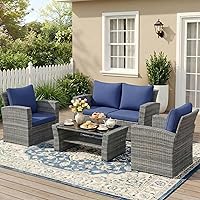
Buy extruded aluminum if you need seating for several people and want to rearrange it easily. The {{product B0FMRC2ZST | A five-piece set with 3mm aluminum frames, deep cushions and fade-resistant Olefin fabric.}} is best for a porch or balcony conversation area.
Its seat depth of 27.5 in and seat width of 31.5 in are roomier than typical patio seating, and the 6-inch cushions are built to hold their shape over years of use.
The {{product B0F5MSQY3L | A seven-seat set with a wood grain aluminum frame that stays cooler in summer sun.}} is best for a large group that wants a big seating footprint without heavy cast pieces. The heat-treated wood grain coating is a nice touch on a sun-facing deck, since bare metal can get hot by midday.
What about wicker and rattan?
If you're weighing woven frames against metal, our wicker vs rattan comparison explains how those materials differ. Both are lighter than cast aluminum, though the weave needs its own care.
What about cast iron?
Cast aluminum sits between extruded aluminum and cast iron on the weight scale. Our cast aluminum vs cast iron patio furniture comparison covers the heavier end of the market for anyone who wants an even more anchored bench.
The verdict: pick the frame for how you'll use the patio
For most readers, an extruded aluminum set is the better buy, because it covers more seating and moves without a helper. The lighter frame resists rust and handles everyday use well.
Choose cast aluminum when the piece is the decoration. A bench by the path, a small bistro table or a planter stand benefits from the dense metal and the detailed shapes it can hold.
Use the material comparison as a filter, then check the specs that matter: frame thickness, rated weight and finish. A thick extruded frame beats a thin cast one, and a heavy cast bench needs the same touch-up care as any painted metal.
If you're still deciding between frame types for a full set, match the frame to how often you'll move the furniture. Then size the set to your deck and enjoy the season.
Frequently asked questions
Is cast aluminum stronger than regular aluminum?
Cast aluminum is denser and more rigid because it is poured into a mold, so it holds detailed shapes and heavy loads without flexing much. Regular extruded aluminum is lighter and easier to move in large pieces, though its hollow tubes can bend under a sharp blow.
Which type needs less maintenance outdoors?
Both resist rust well when the finish is intact. Extruded aluminum with a powder coat is easy to wipe down and rarely pits.
Cast aluminum has more crevices and decorative grooves where dirt and water can collect, so it needs a little more attention to keep the finish sound.
Why is cast aluminum furniture usually heavier?
Cast aluminum is solid or thick-walled metal rather than a hollow tube, so a piece of the same size carries more metal and more weight. That weight keeps a bench or table from shifting in wind, but it makes moving the furniture around the yard harder.
Can cast aluminum patio furniture rust?
The aluminum itself does not rust, but cast aluminum often has iron hardware or painted joints that can corrode if the coating chips. Touch up any bare spots and wipe standing water off the joints to keep the frame sound through wet seasons.
Which is better for a windy patio, aluminum or cast aluminum?
Cast aluminum holds its place better in wind because its heavier frame resists tipping. Lightweight aluminum sets need tie-downs or storage during storms.
For a covered porch with little wind, the lighter aluminum set is easier to rearrange and store.