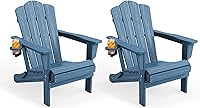
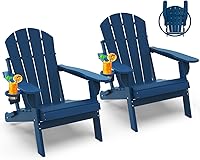
Why Are Adirondack Chairs So Expensive?
Adirondack chairs cost more because of the material and the build, not the name. A chair with thick recycled HDPE slats, marine-grade stainless hardware and a heavier frame needs more raw material and more machine time than a light folding seat, and that shows up in the price.
On this page (8 sections)
- Why are Adirondack chairs so expensive compared with a basic lawn chair?
- Which materials push the price up most?
- What does construction quality add to the cost?
- Does the brand name really change the price?
- Where can you save without losing quality?
- How much should you expect to spend?
- Is the higher price worth it for a chair you leave outside?
- So why are Adirondack chairs so expensive, and when should you pay more?
Why are Adirondack chairs so expensive? The material and the construction set the price, not the brand label.
A heavy chair built from thick recycled lumber with marine-grade hardware costs more to make than a light folding seat, and you feel the difference in weight and in how long it lasts.
The deep seat and wide armrests also mean more material than a simple upright chair. Add the finishing steps and the hardware, and a well-made Adirondack lands in the premium tier.
The good news is that you can trace most of the cost to a few parts you can compare before you buy.
Why are Adirondack chairs so expensive compared with a basic lawn chair?
An Adirondack uses more material per seat. The reclined back, the broad arms and the angled legs all take longer boards than a straight lawn chair, so the raw material bill starts higher.
The shape matters too. Slats are cut and shaped, then joined at angles so the seat reclines and the back leans.
That takes more cutting and drilling than a flat folding seat with one hinge.
Then comes the hardware. A chair with a reclined back needs strong fasteners at every joint.
Stainless steel costs more than painted steel, and the maker has to buy it in bulk.
Finally, weight and shipping. A 34 lb chair takes more to pack and move than a light folding seat.
That cost lands in the price even when you never see it.
Which materials push the price up most?
Teak and heavy recycled HDPE sit at the top; pine and light resin sit at the bottom. The material you pick is the single biggest lever on what you pay.
Teak and cedar are premium hardwoods. They look warm and age well, but the boards cost more and both need oiling or sealing over time.
Pine is cheaper to buy and lighter to move, though it dents and needs repainting.
HDPE lumber costs more than pine up front. It's made from recycled plastic and formed into boards that don't rot, splinter or need paint.
POLYWOOD says its lumber includes landfill-bound and ocean-bound plastics, and that's part of why the material costs more than a basic resin.
Light resin chairs are the budget tier. They're hollow or thin-walled, so they use less material.
That keeps the price low but leaves a lighter seat that can flex and fade faster in strong sun.
What does construction quality add to the cost?
Thicker slats, tighter joints and better hardware add cost at every step. This is where two chairs at the same size can differ in price by a wide margin.
A heavy chair uses thicker boards and more of them. The seat and back have more contact points, and the frame takes a bigger load.
More material means a higher bill and a heavier finished chair, like the 34 lb models from POLYWOOD and highwood.
Assembly and finishing take time. Boards are cut, edges are rounded and holes are drilled before anything is packed.
A chair with curved arms or a shaped waterfall front needs more machining than a flat slat seat.
Hardware is a quiet cost. Marine-grade stainless steel resists rust near the coast and around a fire pit.
The POLYWOOD Modern uses 18/8 marine-grade stainless hardware, and that fastener cost is built into the price.
Does the brand name really change the price?
The brand matters less than the material and the warranty behind it. Two chairs with the same HDPE lumber and stainless hardware can still differ, but the gap is usually smaller than the material gap.
A brand that makes its own lumber controls quality and supply. POLYWOOD makes its own HDPE lumber and builds the chairs in the USA.
That setup costs more than buying generic resin boards, but it also supports longer color retention and fewer defects.
A warranty signals how long the maker expects the chair to last. highwood backs the Hamilton with a 12-year residential limited warranty. That kind of coverage costs money to offer, and it's part of what you pay for.
Off-brand chairs can be good value. The risk is that you can't easily tell how thick the boards are or what steel the screws use until the chair arrives.
Where can you save without losing quality?
Save on the frame style and the finish, not on the material. A folding or reclining chair in a basic color costs less than a fixed chair in a specialty shade, and it's easier to store.
Folding models cut shipping and storage costs. The highwood Hamilton folds for storage and reclines for comfort, so it earns its keep in a small yard or a seasonal setup.
You can compare more of them in our guide to folding Adirondack chairs.
Color choice matters too. Black and basic greys are often the cheapest finishes because they're made in larger batches.
A bright custom shade costs more to produce and may take longer to ship.
Skip the cushion bundle if you're watching the budget. A separate all-weather cushion costs less than a bundled set, and you can add one later.
Buy the chair first and match the cushion to the frame.
Which chair is the best value for most people?
The highwood Hamilton is the best value overall for most buyers. It folds, it reclines and it's made in the USA, so it covers storage and comfort in one seat.
Its engineered woodgrain texture looks like real wood without the sanding and staining. The 304 stainless steel hardware resists rust, and the frame won't rot or splinter if you leave it out.
The trade-off is that it needs self-assembly and the reclining mechanism adds parts to check.
Which chair is best for a fixed, modern look?
The POLYWOOD Modern is the best pick for a fixed seat with clean lines. Its thick HDPE frame and marine-grade hardware explain most of its price, and the contoured seat and waterfall front add comfort.
The ColorStay treatment puts UV inhibitors into the lumber, so the finish holds its color in strong sun. It measures 32"D x 29.25"W x 34"H and weighs 34 lb.
If you want the classic profile instead, our comparison of GREENVINES vs POLYWOOD shows where the two brands differ.
How much should you expect to spend?
Budget tier gets you a lighter seat for occasional use; mid-range and premium buy thicker material and better hardware. Price tracks the material bill more than any single feature.
A budget chair is fine for a covered porch or a few seasons. It's lighter, so it's easier to move, but the thin walls and painted steel may not survive year-round weather.
Mid-range chairs move up to thicker resin or HDPE and better fasteners. Premium chairs add marine-grade stainless, longer warranties and more shaping in the seat and arms.
That's the tier for a chair that stays outside all year.
Set your budget by how long you plan to keep the chair. A premium HDPE seat that only needs soap and water can cost less over 10 years than three budget chairs.
Our guide to how to clean plastic Adirondack chairs shows how little upkeep the material needs.
Which chair is best for a classic look on a mid-range budget?
The POLYWOOD Classic AD4030 is the best classic pick. It uses the same HDPE lumber as the Modern, with a flared arm and a solid back that reads more traditional.
It assembles in about 1 to 2 hours with the included marine-grade hardware. The wide, reclined profile suits long lounging sessions, and it takes an all-weather seat cushion if you want more padding.
The main trade-off is that the solid back blocks more air than a slat back on a hot day.
Is the higher price worth it for a chair you leave outside?
Yes, if the chair stays outside all year. A heavier HDPE chair with stainless hardware resists moisture, sun and temperature swings, so it avoids the repainting and replacement that eat into the savings of a cheap chair.
Check three things before you pay more. First, the frame material: solid HDPE boards beat hollow resin for weight and rigidity.
Second, the hardware: marine-grade stainless costs more but resists rust. Third, the warranty: a long residential warranty tells you the maker expects the chair to last.
Then look at the parts you touch. A contoured seat and wide arms cost more to shape than flat slats, and they're what make an Adirondack comfortable for hours.
If you'll sit in it often, that shaping is worth part of the price.
Skip the premium tier if the chair lives under a roof and comes in every night. A mid-range folding model covers that use at a lower price.
For anyone deciding between two popular plastic brands, our POLYWOOD vs HDPE comparison breaks down the material differences.
So why are Adirondack chairs so expensive, and when should you pay more?
The answer to why are Adirondack chairs so expensive comes down to material and build. Thick recycled lumber, shaped slats, marine-grade stainless hardware and long warranties all cost more than the parts in a light lawn chair.
Pay the premium when the chair stays outside, gets daily use or sits near salt air or a fire pit. Save with a folding model or a basic color when the chair is occasional or covered.
Pick the highwood Hamilton for folding and reclining value, the POLYWOOD Modern for a fixed modern seat, or the POLYWOOD Classic for a traditional profile. Whichever you choose, buy the thickest material and the best hardware your budget allows, then keep it clean with soap and water.
Frequently asked questions
Does a more expensive Adirondack chair last longer?
Usually yes, up to a point. Price buys thicker material and better hardware, which resist splitting and rust.
A cheap chair stored outside all year may need replacing sooner than a heavy HDPE one that only needs soap and water.
Is solid wood more expensive than plastic for an Adirondack chair?
It depends on the species. Teak and cedar cost more up front than a basic HDPE chair, and both need periodic oiling or sealing.
Recycled plastic costs more than pine at the start but skips the repainting and staining.
Are Adirondack chairs cheaper in the off-season?
Often yes. Patio stock peaks in spring and early summer, so late-season clearance brings the price down.
If you buy off-season, store the chair clean and dry so the savings don't turn into a repair.
How much should I budget for an Adirondack chair that lasts?
Plan on the mid-range or premium tier for a chair you leave outside. Budget tier gets you a lighter seat for occasional use.
Heavy HDPE with stainless hardware sits in the premium tier and needs less upkeep over the years.
Can I build an Adirondack chair for less?
You can build one from plans and boards for less than a finished premium chair. The trade-off is your time, the need for tools and the finishing work.
A kit sits between the two, with precut parts and hardware.