Adirondack Chair Types Explained
The main types of Adirondack chairs are the classic slat-back, the modern low-profile chair, the folding chair and the rocker or glider. Pick classic for the traditional wide look, modern for clean lines, folding for storage and rockers for motion.
On this page (8 sections)
- What are the main types of Adirondack chairs?
- Classic Adirondack chairs: the traditional slat-back shape
- Modern Adirondack chairs: cleaner lines and a more upright back
- Folding Adirondack chairs: storage and portability
- Rocking and gliding Adirondack chairs: adding motion
- Wood vs HDPE plastic: which material suits each type?
- Armrest and back styles: how they change the chair
- How to choose the right type for your space
The main types of Adirondack chairs are the classic slat-back, the modern low-profile chair, the folding chair and the rocker or glider. Pick classic for the traditional wide look, modern for clean lines, folding for storage and rockers for motion.
Chair shape changes comfort, footprint and how you store it far more than color does. This guide walks through each type, the materials and the armrest styles so you can compare before you buy.
What are the main types of Adirondack chairs?
There are four main types: classic, modern, folding and rocker or glider. Each keeps the low, reclined Adirondack posture but changes the back, the legs and how the chair moves or stores.
The classic is the original slat-back design. The modern reshapes it with clean lines and a more upright back.
Folding versions add hinges so the chair packs away. Rockers and gliders add a curved base or a sliding mechanism for motion.
Material cuts across all four types. Most chairs now use HDPE plastic lumber, though wood versions remain for the traditional look.
A chair's type and its material together decide how it feels, how it holds up and how much care it needs.
Weight matters too, because it shapes how often you move the chair. The classic and modern chairs here both weigh 34 lb, while the folding chair weighs 33 lb.
A folding frame adds hinges and saves space without adding much bulk.
The comparison below sums up the trade-offs. Read it as a starting map, then use the sections that follow to dig into each type.
| Type | Best for | Typical back | Footprint and storage |
|---|---|---|---|
| Classic | Traditional look on a porch | Solid slat back | Deep recline, fixed frame |
| Modern | Clean lines on a patio | Slat back, more upright | Slightly shallower seat |
| Folding | Small decks and seasonal storage | Solid back | Folds flat |
| Rocker or glider | Motion and relaxation | Varies by model | Needs clearance to move |
Rule: start with the type you will actually use. If the chair stays in one spot all season, a fixed classic or modern makes sense.
If it moves or gets stored, folding wins.
Classic Adirondack chairs: the traditional slat-back shape
A classic Adirondack chair is the wide, low slat-back chair with flared arms and a deeply reclined seat. It is the shape most people picture when they hear the name, and it has stayed largely unchanged for good reason.
The design puts the seat close to the ground and tilts the back so you sink into it. Wide flat arms carry a drink or a book, and the flared arms widen toward the front for elbow room.
The slat back lets air move and rain drain.
The POLYWOOD Classic Adirondack Chair AD4030 is a good example of the type. It uses a solid back and flared arms in slate grey HDPE lumber.
POLYWOOD says the frame handles hot sun and cold winters and cleans with soap, water and a soft brush.
Its deep seat measures about 35.77 in front to back, so it needs a fair amount of porch depth. The flared legs are another classic marker, since they splay outward to spread the load and steady the wide seat.
That recline is the point of the classic, but it is worth checking the floor space before you commit.
Assembly is part of the classic experience too. The AD4030 comes with marine-grade quality hardware and clear instructions, and POLYWOOD estimates the build takes about 1 to 2 hours.
The finish is a painted look on the HDPE, and the material itself is the brand's proprietary lumber made partly from landfill-bound and ocean-bound plastics.
Pick a classic if you want the traditional look and a deep lounge posture. Skip it on a shallow balcony where the long seat would crowd the railing.
For a closer look at how this chair holds up against a rival brand, our GREENVINES vs POLYWOOD comparison sets the two side by side.
Modern Adirondack chairs: cleaner lines and a more upright back
A modern Adirondack keeps the low lounge posture but uses cleaner lines, tapered legs and a more upright back. It suits buyers who want the comfort without the heavy slat look.
The modern chair often has a contoured seat with a waterfall front that rolls down at the knee. Wide armrests and a relaxed back angle still invite long sits, but the overall profile looks lighter and less rustic.
The POLYWOOD Modern Adirondack Chair is the type to beat here. It uses HDPE lumber with UV inhibitors in the material, so the color holds up in sun.
The contoured seat and wide arms are built for extended lounging.
It measures 32 in deep, 29.25 in wide and about 34.7 in high. That makes it a touch more compact than a deep classic, which helps on smaller decks.
The tapered legs and slat back give it the cleaner profile.
The arms on this model are rounded or rolled rather than flared, so elbows rest on a softer edge. The frame material is HDPE like the classic, but the build leans on a slat back and a more upright seat angle.
The hardware is 18/8 marine-grade quality stainless steel with a corrosion-resistant coating, and assembly needs instructions but no special tools beyond what the kit includes.
Choose a modern Adirondack for a patio or fire pit area where the look matters as much as the comfort. Skip it if you want the wide flared arms and deep solid back of the original.
Our POLYWOOD Adirondack chair review covers how this model compares to the classic in more detail.
Folding Adirondack chairs: storage and portability
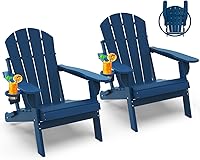
A folding Adirondack uses hinges so the chair collapses flat for storage or carrying. It is the type to pick when your seating area doubles as a walkway or packs up for winter.
Folding chairs keep most of the Adirondack shape, including the reclined back and wide arms. The trade-off is the hinge hardware and the frame, which has to flex less than a fixed chair to stay rigid.
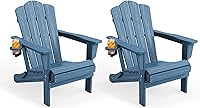
The MUCHENGHY Folding HDPE Adirondack Chair shows how the type works. Its back reclines to about 103 degrees, the seat is 20 in wide and the arms are 4.9 in wide.
It folds compactly and supports up to 380 lb.
A hidden cup holder tucks into the armrest and folds away when not in use. That keeps the classic look while adding a practical feature.
Assembly takes about 15 to 30 minutes across five steps.
The frame is plastic HDPE with straight legs rather than flared ones, and the back is a solid style. It measures 29.5 in deep, 22 in wide and 35 in high when open.
That narrower width is part of why it folds and stores so easily.
Pick folding if you store chairs in a shed or move them between the deck and the yard. Skip it if you want the most rigid frame and never plan to move the chair.
Our guide to the best folding Adirondack chairs compares more models in this type.
How folding chairs compare on storage space
Folding saves the most room when the chair goes flat against a wall. The MUCHENGHY chair measures 29.5 in deep when open, so the folded footprint is smaller than a fixed classic's 35.77 in depth.
It also folds without tools, since the hinges are part of the frame and the five-step assembly only happens once. For a small deck or a shared balcony, that flat storage is the whole reason to choose this type over a fixed chair.
Rocking and gliding Adirondack chairs: adding motion
Rocking and gliding Adirondacks add a curved base or a sliding mechanism so the chair moves. They suit porches and quiet spots where a gentle sway is part of the appeal.
A rocker sits on two curved runners that let the whole chair tilt back and forth. A glider uses a fixed frame with a seat that slides on rails.
Rockers need more clearance behind and in front, while gliders take up a fixed footprint.
The motion changes the stability picture too. A rocker on a smooth deck can slide, so it needs a stable, level surface.
A glider stays put but its moving seat needs clear space so nothing catches in the rails.
The base movement also affects how the chair fits a room. A glider's frame stays in one spot, so it works against a wall or a railing, while a rocker's runners sweep forward and back and need open floor.
Check the swing of the runners against the porch edge before you buy.
Choose a rocker for a traditional porch and a glider for a patio where the frame should stay fixed. Skip motion chairs on steep or uneven ground where the base cannot sit level.
Wood vs HDPE plastic: which material suits each type?
HDPE plastic lumber is the lowest-maintenance choice and suits every chair type, while wood gives the traditional look but needs regular care. The material you pick decides how much upkeep the chair demands.
HDPE is a dense polyethylene that resists moisture, sun and temperature swings. It does not crack, peel or need painting.
A soap-and-water wash is the whole maintenance routine, which is why most folding and modern chairs use it.
Wood, usually cedar or teak, brings the classic Adirondack look and a natural grain. It needs sealing or oiling to hold up, and it can splinter or gray without care.
Wood chairs also tend to weigh more than HDPE versions.
All three products in this guide use HDPE. The POLYWOOD chairs use the brand's own lumber, which the company says includes landfill-bound and ocean-bound plastics.
The MUCHENGHY chair uses weather-resistant HDPE too.
Look at the frame details when you compare HDPE chairs. The POLYWOOD modern chair adds UV inhibitors to its ColorStay lumber to slow fading, and its hardware is 18/8 marine-grade quality stainless steel.
The classic uses marine-grade quality hardware as well. The folding chair's finish is simply the plastic itself, so there is no coating to wear off.
Pick HDPE if you want a chair you can leave outside all year with almost no work. Pick wood if the grain and traditional feel matter more than the upkeep.
For cleaning tips on the plastic type, see how to clean plastic Adirondack chairs.
Armrest and back styles: how they change the chair
Arm and back styles change the look and feel of an Adirondack more than most buyers expect. Flared arms widen toward the front, rounded arms soften the edge and wide flat arms hold a drink or a cup holder.
The back comes in two main styles. A solid back uses wide boards for a smoother, more filled-in look.
A slat back uses narrower boards with gaps, which lets air through and dries faster after rain.
| Style | Look | Best for |
|---|---|---|
| Flared arms | Wide, traditional | Classic chairs and deep lounging |
| Rounded arms | Soft, modern | Elbow comfort on modern shapes |
| Solid back | Filled in, smooth | Windy spots and a fuller look |
| Slat back | Open, airy | Warm climates and quick drying |
Arm style is mostly about comfort and look. A wider flat arm gives more room for a cup or plate, while a rounded arm feels softer against the elbows.
The POLYWOOD classic uses flared arms and a solid back, while the modern model uses wide arms and a slat back. The MUCHENGHY folding chair uses rounded arms and a solid back, and its armrests measure 4.9 in wide.
Leg style belongs in the same conversation. The classic uses flared legs while the folding chair has straight legs, while the modern chair uses tapered legs for a lighter line.
The leg style changes the stance as much as the arm style changes the silhouette.
Rule: match the arm and back style to your climate and how you use the chair. A slat back dries faster in wet weather, and a wide arm holds more.
How to choose the right type for your space
The right type depends on where the chair lives, how often it moves and how much upkeep you accept. Match the type to the spot first, then the material and style.
Start with the space. A deep classic needs about 36 in of depth, while a modern chair at 32 in fits tighter decks.
A folding chair is the pick when the same spot has to clear for foot traffic.
Then think about weather. A porch with a roof protects wood, while an open deck favors HDPE.
A chair left in full sun all year should use a material with UV protection, like the POLYWOOD modern chair's fade-resistant lumber.
Finally, decide on motion and storage. A rocker or glider adds comfort but needs clearance.
A folding chair saves space but gives up some rigidity.
Also weigh the seat and arm dimensions, not just the outer footprint. The classic and modern chairs both weigh 34 lb, so neither is easy to move alone for long distances.
The folding chair at 33 lb and 22 in wide is the easiest to carry and tuck away.
Pick the classic for a covered porch, the modern for a patio, the folding chair for a small or shared deck and a rocker for a wide porch. If you only buy one, the modern Adirondack is the safest all-round choice.
Frequently asked questions
What is the difference between a classic and a modern Adirondack chair?
A classic Adirondack has a slat back, wide flared arms and a deep reclined seat. A modern Adirondack keeps the low lounge posture but uses cleaner lines, tapered legs and a more upright back.
Are folding Adirondack chairs as sturdy as fixed ones?
A folding Adirondack trades some rigidity for portability. The MUCHENGHY folding chair supports up to 380 lb and uses HDPE, so it holds up well for everyday use as long as the folding joints stay tight.
What material is best for an Adirondack chair?
HDPE plastic lumber is the lowest-maintenance choice and handles sun and rain without painting. Wood gives the traditional look but needs sealing, while HDPE stays weatherproof and cleans with soap and water.
Do Adirondack chairs come in different armrest styles?
Yes. Flared arms widen toward the front like the classic design, rounded arms are softer on the elbows, and wide flat arms often hold a cup holder or a plate.
Arm style changes the look more than the comfort.
Which Adirondack chair type is best for a small deck?
A folding or modern Adirondack saves the most space. The modern POLYWOOD chair measures 32 in deep, while the folding MUCHENGHY chair folds away and measures 29.5 in deep.