How to Stop a Rocking Chair from Rocking
To stop a rocking chair from rocking, steady the base first: seat the chair on a flat, hard surface and stop the runners from moving. A runner lock, a wedge under each curve or a floor pad set usually fixes the motion in minutes.
On this page (9 sections)
- Why does my rocking chair rock when I want it still?
- Can you stop a rocking chair from rocking without tools?
- How do you lock the runners so the chair stays still?
- What can you put under the runners to stop the motion?
- How do you stop a wooden rocking chair from rocking on a porch?
- How do you stop a chair from wobbling as well as rocking?
- Which fixes suit different chair types?
- How do you keep the chair still once it's fixed?
- What should you do next?
To stop a rocking chair from rocking, steady the base first: seat the chair on a flat, hard surface and stop the runners from moving. A runner lock, a wedge under each curve or a floor pad set usually fixes the motion in minutes.
The trick is to separate two problems. One is the rocking motion itself, which you can block.
The other is a wobble or squeak, which comes from the floor or the frame. Here's how to stop a rocking chair from rocking without damaging the chair.
Why does my rocking chair rock when I want it still?
A rocking chair rocks because the curved runners under the seat turn any weight shift into motion. On a flat floor, the curve rolls a little with every lean, so the chair never truly sits still.
Several things make this worse. A soft rug or a slightly uneven porch board lets the runners settle into a dip and start swinging.
A loose arm or leg joint also lets the frame shift, and that shift tips the base.
A chair with worn runner tips rocks more freely because the curve meets the floor on a sharper edge. Chairs with a flat bottom rail rock far less, which is why a glider behaves differently.
If you're choosing between styles, our comparison of a glider vs rocking chair explains the base design difference.
Before you buy any fix, push the empty chair gently and watch where it moves. A base that slides backward and forward needs a stop.
A base that tips side to side needs a flatter surface or a shim.
Can you stop a rocking chair from rocking without tools?
Yes. Repositioning the chair is the free first step, and it often settles a light rock on its own.
Move it to the firmest, flattest spot you have and try again.
Hard surfaces hold the runners steady. Wood decking, concrete and tile give the curve consistent contact, while deep carpet and soft turf let it sink.
Turn the chair a quarter turn so both runners cross the floorboards instead of running along one gap.
Try these free steps in order:
- Clear the floor under the runners and sweep away grit.
- Shift the chair so both runners rest on the same firm surface.
- Sit squarely and keep your weight centered over the seat.
- Tighten any visible screws or bolts on the arms and legs.
If the chair still rocks, the runners need a physical stop. That's when a lock or wedge earns its place.
How do you lock the runners so the chair stays still?
A runner lock is the surest fix. It clamps across the curved base and holds the runners at a set angle, so the chair can't swing.
Most locks are two brackets joined by a strap or bar that sits under the seat. You fit them over the runners and tighten until the base is held.
The chair then behaves like a fixed seat, and you can loosen the lock when you want to rock again.
Check two things before you buy one. Measure the width and thickness of your runners, because locks are sized to fit specific curves.
Also confirm the lock clears the floor, so it doesn't scrape when someone sits down.
Some locks bolt on permanently. That's fine if the chair will always stay put, but choose a strap style if you want to switch back to rocking.
A lock also helps on a chair used as a reading seat, where the motion distracts rather than soothes.
What can you put under the runners to stop the motion?
Wedges and floor pads are the low-cost option. Two wedges, one under each runner, stop the curve from rolling without any hardware on the chair itself.
Cut two softwood wedges at an angle that matches your runner curve. Push one under each runner, snug against the curve, then test the seat.
Trim or sand the wedge until the chair sits level and doesn't creep.
A dense foam or rubber floor pad set works the same way on a smooth surface. The pad adds grip, and its edge can act as a small curb that the runner leans against.
Felt pads alone won't stop a rock, though they do protect the floor.
Here's how the main options compare:
| Fix | Best for | Cost tier | Removable |
|---|---|---|---|
| Runner lock | A chair that must stay fixed | Budget to mid-range | Most strap styles |
| Wooden wedges | A quick, cheap stop | Budget | Yes |
| Rubber floor pads | Grip plus floor protection | Budget | Yes |
| Flat board under both runners | Soft rugs and uneven decks | Budget | Yes |
Wedges suit wooden chairs best. The material matches the runners and won't mark them the way a hard plastic block can.
How do you stop a wooden rocking chair from rocking on a porch?
A wooden chair on a porch needs a flat, dry surface and a stop that grips the curve. Porch boards move with the weather, so check the floor before blaming the chair.
Run a straightedge across the boards under both runners. A high or low board tips the chair and starts a rock even when nobody is leaning.
A flat board laid under both runners gives the base one even surface.
Keep the wood dry. A damp runner curve swells and changes shape, which makes the rock feel uneven.
Wipe the runners after rain and store the chair under cover in wet weather.
If you plan to keep the chair outside long term, a wooden model holds up well when it's sealed and covered. Our picks for a wooden outdoor rocking chair cover the frame and finish details worth checking.
How do you stop a chair from wobbling as well as rocking?
A wobble is a separate fault, and the frame and floor usually cause it. Stop the rock first, then track down the wobble so the chair sits square.
Work through the frame in order. Tighten every screw, bolt and dowel you can reach on the arms, legs and seat rails.
A loose joint lets one corner drop, and that corner tips the base.
Then check the floor. Slide a thin shim under the runner that sits off the ground and test the seat.
Add shims in small steps until the chair stops tipping, because too thick a shim starts a new rock.
A squeak often means two parts are rubbing. A little wax on the joint or the runner tips usually quietens it.
Fix the wobble before you lock the runners, or the lock will hold a crooked base in place.
Which fixes suit different chair types?
The best fix depends on the base. Match the stop to the runner style, so the chair stays still without damage.
- Curved wooden runners: use wooden wedges or a strap runner lock. Both grip the curve and lift off cleanly.
- Flat-bottom rockers: a rubber pad or a board under the base is enough. These chairs rock less anyway.
- Metal or plastic runners: a strap lock with rubber pads works well, since the surface is smooth and slick.
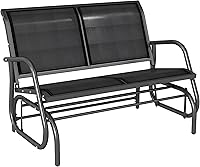
- Gliders: these don't have curved runners, so a pad or a shim fixes a wobble. A glider is already a still base choice, as our rocking chair vs swing guide notes when comparing seat types.
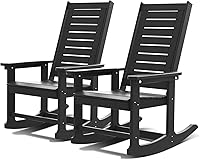
For a pair of chairs on one porch, a set gives you two matching seats and two matching fixes. Our roundup of an outdoor rocking chairs set of 2 covers models sized for shared seating.
How do you keep the chair still once it's fixed?
Keeping the chair still comes down to regular checks and gentle use. A fix that worked last season can loosen after months of weather and use.
Re-tighten the frame joints at the start of each season. Check the lock straps or wedges for cracks and replace any that look worn.
On a porch, sweep grit from under the runners so the base doesn't grind on the boards.
Lift the chair when you move it rather than sliding it. Sliding wears the runner tips and scuffs the floor, and it can shift a wedge out of place.
Add felt or rubber pads if the base sits on a finished surface.
If the chair will stay fixed for good, a lock is the simplest answer. If you only want it still some of the time, wedges are easier to pull out.
Either way, the goal is a steady base, not a chair you have to fight.
What should you do next?
The quickest answer to how to stop rocking chair from rocking is a flat surface plus a physical stop under the runners. Try moving the chair first, then fit wedges or a runner lock if it still moves.
Choose wooden wedges for a budget wooden chair you want to rock again later. Choose a strap runner lock for a chair that needs to stay fixed for good.
Add a shim only after the frame is tight, so you fix the wobble and the rock in the right order.
Once the chair is steady, think about where it sits. A covered spot keeps the runners dry and stops the wood from swelling.
If you're still shopping for a seat, compare rocking chairs and porch swings before you commit to a base type.
Frequently asked questions
How do I stop a rocking chair from rocking on a rug?
Move the chair onto a hard, flat floor or set a solid board under both runners so the curved base can't dig into soft fibers. A rug gives the runners uneven contact and invites motion, so a flat board plus a runner lock keeps it still.
Can you lock a rocking chair so it stops moving?
Yes. A runner lock clamps the curved base to stop the chair swinging, and wooden wedges pushed under each runner do the same job for less money.
Both are removable, so the chair can rock again when you want.
Why does my rocking chair still wobble when it isn't rocking?
A wobble usually means the base sits unevenly or a joint has loosened. Check the floor for high and low spots, tighten visible screws and bolts, and add a thin shim under the runner that sits off the ground.
Will a rocking chair damage my porch floor if I stop it rocking?
It's less likely to scuff a porch once the runners stop moving, because the base isn't dragging back and forth. Add felt or rubber pads under the runners and lift the chair when you move it, rather than sliding it across the boards.