How to Choose a Rocking Chair for a Front Porch
Choose a rocking chair for a front porch by matching its fit, rocking path and material to your space and routine. Measure the chair area, compare seat dimensions and decide how much care you want to give it.
On this page (9 sections)
- How do you measure a porch for a rocking chair?
- What size and shape should you look for?
- Which material suits your porch and upkeep routine?
- Which rocking chair for a front porch fits your needs?
- How do you set up a porch rocker safely?
- How do you care for a porch rocking chair?
- What common mistakes should you avoid?
- Should you choose a rocker or a porch swing?
- How do you decide which porch rocker to buy?
A rocking chair for a front porch should fit your body, the floor space and the weather exposure. Measure the chair area and rocking path, compare seat and arm dimensions, then choose a material whose care fits your routine.
A rocker needs room to move without hitting a wall, door or nearby furniture. If you're planning the whole entry, our front porch furniture guide can help you arrange the seating and walking space together.
How do you measure a porch for a rocking chair?
Measure the chair's full footprint and leave clearance for the rocking path before you choose. The chair needs space for its runners to move, plus room for people to walk past and sit down safely.
Start with the chair's width and depth, but don't treat those numbers as the full space needed. Mark the footprint with tape, then add a rough path in front and behind; if you can, use a similar rocker to see how far it travels.
Check the whole area around the chair:
- Leave enough room for doors to open and close.
- Keep the usual walking route clear.
- Check for railings, walls, planters, tables and steps.
- Make sure the chair can pass through the doorway on the way to its spot.
- Leave room to sit down and stand up without twisting around another piece of furniture.
A porch can fit a chair at rest and still feel cramped once it rocks. Think about how people enter the house, carry packages and use nearby seating, not just whether the chair fits inside a taped rectangle.
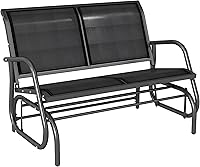
If your porch is narrow, compare a rocker with a glider and measure both options in motion. Our rocking chair vs glider guide explains how their movement differs.
What size and shape should you look for?
Choose a seat, back and arms that fit the people who will use the chair. Compare the measurements with a chair you find comfortable instead of relying on words like “standard” or “oversized.”
Seat width matters, but so do seat depth and arm height. A seat that's too deep may make it harder to sit back comfortably, while arms that are too high or low can feel awkward when you rest your hands.
A taller back may suit someone who wants support behind more of their back and head. If more than one person will use the rocker, consider the largest regular user, then check that the chair still leaves enough space around it.
Try measuring a chair at home that feels comfortable. Note the width between arms, seat depth and height of the arms from the floor, then compare those figures with the porch chair you're considering.
The KINGYES rocker has a stated 21.1 in seat width and is 35 in deep. The Shine Company Vermont is 27 in wide and 34 in deep, with a 20.5 in backrest width; use those dimensions to judge fit, not the “oversized” or “ergonomic” label alone.
Which material suits your porch and upkeep routine?
Choose wood for a natural look if you are comfortable caring for its finish, or HDPE if you want an outdoor material with less routine upkeep. Also consider the chair's frame and hardware, especially where the porch gets regular sun or rain.
Wood can bring a warm, traditional look to a front porch. The Shine Company Vermont uses solid acacia hardwood and a wood sealant finish, while the Fortune Candy rocker uses solid fir wood with PU wood paint.
Wood finishes may need attention as weather and use affect them. If your porch is uncovered, decide whether you are willing to follow care directions and protect the chair when needed; a covered spot can reduce direct exposure.
HDPE is a plastic lumber material used in outdoor furniture. The KINGYES chairs use HDPE with an iron and stainless steel frame, while the POLYWOOD Presidential uses HDPE lumber.
POLYWOOD says its lumber is designed to resist rot, splintering, cracking, chipping and peeling, and that the chair cleans with soap, water and a soft-bristle brush. That makes it a fit for someone who wants a simple cleaning routine rather than a painted wood finish.
Don't choose by material name alone. Look at the full chair, including its frame, hardware, finish and intended use, then consider where it will sit through different seasons.
For more wood options, see our best wooden outdoor rocking chairs.
Which rocking chair for a front porch fits your needs?
The right chair depends on your main priority: low upkeep, traditional wood, a pair of seats or a reclined wooden seat. Choose from the options below after checking the space each chair needs and the care you want to provide.
POLYWOOD Presidential: a rocking chair for a low-maintenance front porch
The POLYWOOD Presidential suits buyers who want a classic-looking outdoor rocker with minimal routine care. It measures 33.75 in deep, 26.25 in wide and 42.5 in high, so check those dimensions against your marked floor area.
The chair has wide arms, a slat back and included assembly instructions and marine-grade hardware. POLYWOOD says the lumber is made in the USA and backs it with a 20-year residential warranty.
Choose it if ease of care matters more than a natural wood finish. Skip it if you specifically want the look and upkeep of solid wood, or if its depth and height crowd your porch.
Shine Company Vermont: a wooden front porch rocker with a high back
The Shine Company Vermont suits buyers who want solid acacia hardwood, a high back and a traditional porch look. It measures 34 x 27 x 44.5 in and has a 20.5 in backrest width.
It comes partially pre-assembled with rust-resistant hardware. Shine Company says the wood is kiln-dried and sealed for added protection against outdoor elements, and the chair cleans with soap and water.
Choose it if the wood appearance and high back fit your priorities, and you are willing to care for a wood finish. Skip it if you want to avoid wood maintenance or need a very compact chair.
KINGYES set of 2: two outdoor rocking chairs for a wider porch
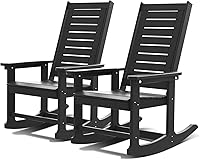
The KINGYES set suits a porch that needs two seats and has room for two broad chairs. Each rocker is 35 in deep and has a stated 21.1 in seat width, so measure both footprints and paths before choosing the pair.
The chairs use HDPE with iron and stainless steel in the frame. KINGYES describes the material as weather resistant and says the chairs can be wiped clean.
Choose the pair if two separate seats fit your layout and you want outdoor chairs made with HDPE. Skip it if your porch is narrow, you only need one chair or two rocking paths would block the door or walkway.
Fortune Candy: a front porch rocker with a reclined seat
The Fortune Candy rocker suits buyers looking for a wooden chair with a relaxed back angle and a deep contoured seat. It measures 26.6 in deep, 28.1 in wide and 41.3 in high.
It is made from solid fir wood and finished with PU wood paint. Fortune Candy describes it as weather resistant and gives it a stated maximum weight recommendation of 600 lb.
Choose it if the wooden finish and reclined seat suit how you plan to use the chair. Skip it if you want the lowest-care option or need to fit more than one chair into a tight porch area.
How do you set up a porch rocker safely?
Set up the chair on a level, stable surface, then check that it moves freely before anyone uses it. Follow the chair's instructions, use the hardware supplied for assembly and keep the rocking path clear.
Before assembly, place the parts where you have enough room to work. Check the instructions and hardware, and avoid tightening pieces in a way that makes later steps difficult if the guide calls for staged assembly.
The KINGYES instructions recommend lightly tightening all screws first, then securing them fully after assembly. Its chairs arrive mostly pre-assembled, and the stated setup time is about 30 minutes.
After assembly, look over the joints and rock the chair gently while keeping it unoccupied. Make sure it doesn't catch on a mat, edge or uneven floor, and reposition nearby furniture if the runners approach it.
A small rug may move or bunch under a rocking chair. If you use one, check that it stays flat through the full motion and doesn't interfere with the runners.
How do you care for a porch rocking chair?
Care depends on the chair's material and finish, so follow its specific instructions. For the POLYWOOD Presidential, POLYWOOD recommends soap, water and a soft-bristle brush; KINGYES says its HDPE chairs can be wiped clean.
For a wood rocker, use the care directions for its finish and avoid assuming that an outdoor label means it can be ignored through every season. A covered location or storage can help limit exposure if you want to protect the finish.
Check the chair from time to time for loose hardware, wear or anything that changes how it rocks. Clean dirt before it builds up, and let the chair dry before covering or storing it.
Don't use a cleaner, brush or protective coating unless it suits the material and finish. A rough scrubber or unsuitable product could damage a surface even when the chair itself is made for outdoor use.
What common mistakes should you avoid?
The most common mistake is choosing by appearance or a broad label before checking fit, movement and care. A chair can look right and still block a door, feel too narrow or require more upkeep than you want.
- Measuring only the chair at rest: include the space the runners need as the chair rocks.
- Ignoring the walking route: leave a path for people to enter and pass without brushing against the chair.
- Assuming “oversized” means comfortable for everyone: compare the actual seat dimensions with a familiar chair.
- Planning two chairs like one: a pair needs space for both footprints and both movement paths.
- Choosing wood without a care plan: consider whether you'll protect the finish as it gets weather and wear.
- Treating all outdoor materials alike: check the chair's frame, hardware and care directions as well as its seat and back.
- Forgetting delivery and assembly: measure doorways and allow room to assemble the chair near its final position.
A short checklist can prevent most of these errors. Measure the porch, map the path, compare the seat and arm fit, then choose a material based on the care you're willing to give.
Should you choose a rocker or a porch swing?
Choose a rocking chair for an individual movable seat or a porch swing when you want shared seating suspended from a frame or ceiling. They have different space and support needs, so plan around how you'll use the porch.
A rocker can be repositioned if the floor and layout allow. A swing needs a suitable support structure and open space for its movement, and it may work better when more than one person wants to sit together.
For a closer comparison, see our porch swing vs rocking chair guide. If you're considering a swing instead, our porch swing size guide can help you compare common lengths with the space you have.
How do you decide which porch rocker to buy?
Pick POLYWOOD if low upkeep is your priority, Shine Company if you want a high-backed acacia rocker, KINGYES if you need two wide seats, or Fortune Candy if you want a reclined wooden seat. Then confirm the dimensions, clear rocking path and care routine fit your porch.
For a narrow porch, start with the chair's footprint and protect the walking route. For a shared porch, measure both seats and both movement paths before choosing a set.
A good rocking chair for a front porch fits the people who will use it and leaves the space easy to move through. If the chair or its path crowds the entry, revisit your layout with the front porch furniture guide.
Frequently asked questions
How much room does a porch rocking chair need?
Measure the chair's width and depth, then leave clear space in front and behind for the runners to move. Include room for the arms, nearby doors, walls and a walking route.
Mark the intended footprint and rocking path with tape before you buy.
This helps reveal a tight fit that the chair's dimensions alone might hide.
Is wood or HDPE better for a porch rocker?
Wood suits you if you want a natural finish and are willing to care for it as needed. HDPE is a lower-maintenance choice designed for outdoor use, though you should still consider the frame, hardware and porch exposure.
Match the material to the weather where the chair will sit and the upkeep you want.
How do I choose the right seat size?
Compare seat width and depth with a chair you already find comfortable. Check back height and arm height too, especially if you want to rest your arms without lifting your shoulders.
If several people will use the rocker, consider the largest regular user and leave room to sit down and stand up.
Should I choose a rocker or a glider for a small porch?
Choose based on the movement path and the shape of your porch. A rocker moves on curved runners and needs clear space in front and behind.
A glider moves on a fixed base, which may suit some layouts better.
Measure either chair in its full range of motion and keep the walking route open.
Can a wooden rocking chair stay outside?
Some wooden rockers are made for outdoor use and have a protective finish, but the finish can still need care as weather and wear take their toll. Follow the chair's care directions and consider a covered spot or storage if you want to limit exposure.